Here’s a more engaging and relatable rewrite of the news story:
US President Donald Trump wrapped up his two-day visit to Beijing claiming he had secured “fantastic trade deals” that would benefit both the United States and China. But despite the bold statements, neither side has revealed many concrete details about what was actually agreed upon.
Trump arrived in China on Wednesday for a crucial summit with Chinese President Xi Jinping, bringing along a powerful group of American business leaders from industries including agriculture, aviation, electric vehicles, and artificial intelligence.
Trade dominated much of the discussion, especially as tensions between the two countries have been growing in recent months, partly due to disagreements linked to the Iran conflict. Business leaders were hoping the meeting would not only produce major commercial deals but also extend the current tariff pause, which is expected to end in November.
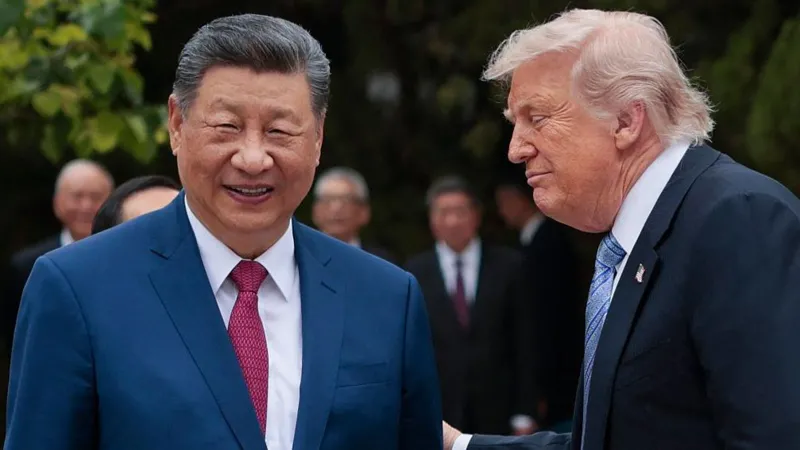
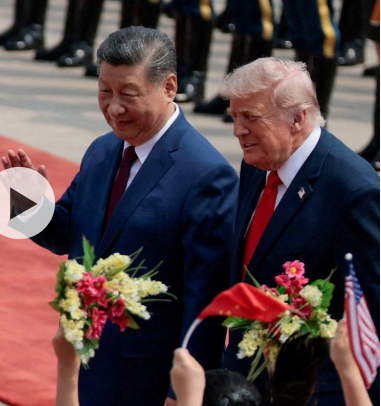
The trip itself was filled with diplomatic showmanship. China rolled out the red carpet for Trump with military honours, a lavish state banquet, and even special access to the highly restricted compound where top Communist Party officials live and work.
Trump appeared pleased with the warm reception and responded by inviting Xi Jinping to visit the White House in September. Both leaders praised the talks afterward, with Trump describing them as “very successful” while Xi called the visit “historic” and “landmark.”
Still, questions remain about what was actually achieved behind closed doors. No major agreements or breakthrough trade announcements have officially been confirmed by either government.
Speaking to reporters aboard Air Force One, Trump said China had agreed to purchase 200 Boeing aircraft, with the possibility of ordering as many as 750 more in the future. Boeing has yet to publicly comment on the claim.
Trump also promised that American farmers would benefit significantly, saying China plans to buy “billions of dollars” worth of US soybeans — a move that could ease pressure on farmers affected by years of trade tensions between the two economic giants.
Despite President Trump’s upbeat claims about major trade wins, China has not officially confirmed any of the reported deals or large-scale purchases announced by the US side.
If the reported Boeing agreement eventually goes through, it would mark the aircraft manufacturer’s first major sale to China in almost ten years. Boeing has struggled to regain access to China’s massive aviation market, largely due to years of political and trade tensions between Washington and Beijing.
When asked about Trump’s comments suggesting that agreements had already been reached, Chinese Foreign Ministry spokesperson Guo Jiakun avoided confirming any specifics. Instead, he emphasized that China-US trade relations are built on “mutual benefit and win-win cooperation.”
Guo also stressed that both countries should focus on carrying out the “important consensus” reached by Trump and Xi Jinping during the summit, saying stronger cooperation could help stabilize not only trade between the two nations but also the wider global economy.
Even so, uncertainty still surrounds the fragile trade truce agreed to in October. Under that arrangement, the US paused plans for heavy new tariffs on Chinese imports, while China eased restrictions on rare earth mineral exports — materials that are essential for global manufacturing and technology production.
In a surprising twist, Trump later told reporters aboard Air Force One that tariffs were not discussed at all during his talks with Xi, despite tariffs being one of the biggest sources of tension between the two economic powers.
The White House, however, said both leaders agreed to create a new “Board of Trade” aimed at managing economic relations more smoothly and reducing the need for constant tariff negotiations in the future.